From the Foundations of Notre-Dame to Krampus: The Cosmogonic Myth of Ordo ab Chao

A Pagan God in the Heart of Christianity
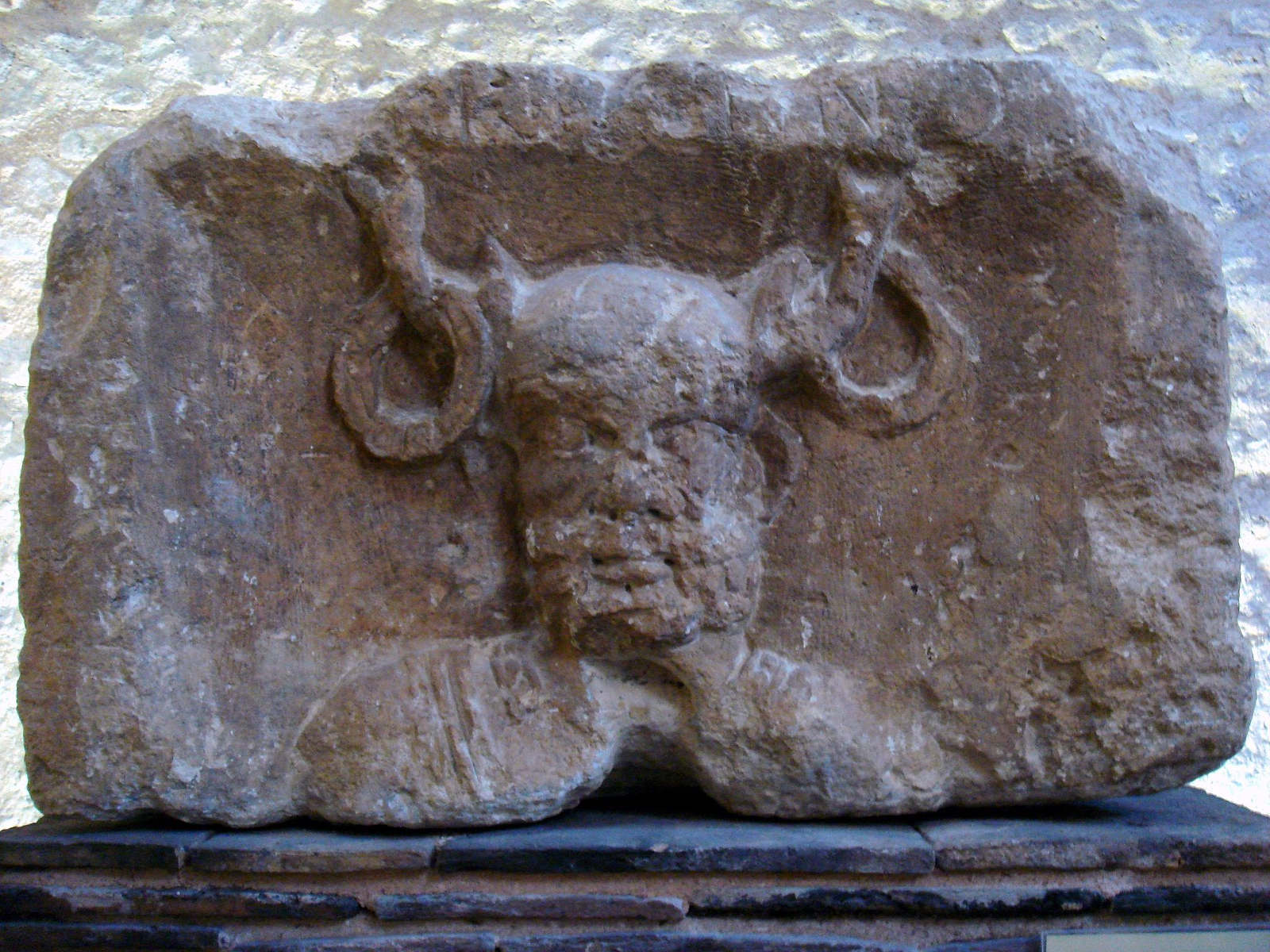
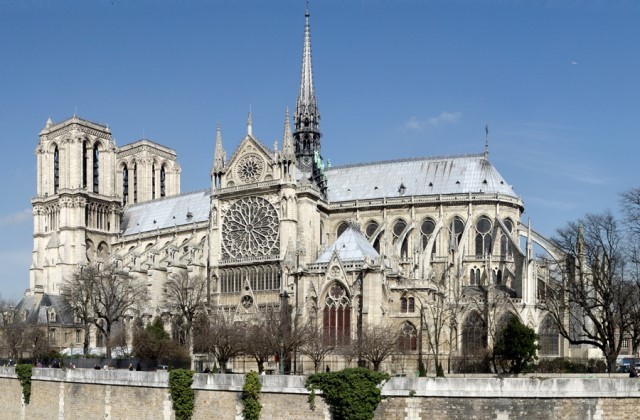
Few would expect to find the roots of Celtic paganism buried in the heart of Christianity. Yet, in the last century, excavations in the square in front of Notre-Dame Cathedral in Paris revealed precisely this: two bas-reliefs of ancient Gallic deities, Cernunnos, the horned god lord of nature, and Hesus, his martial counterpart.

Image of Cernunnos from the Pilier des nautes (“Boatmen’s Pillar”), Paris.


History, as we know, loves irony. And it’s difficult to imagine a more biting irony than that of a temple of Christianity, the symbol par excellence of the submission of paganism, revealing in its immediate vicinity the traces of those very deities it believed it had erased.
This discovery is not simply an archaeological anecdote, but the starting point for a broader reflection. Pre-Christian myths did not simply disappear. To survive the tide of the new dominant faith, they had to mix, camouflage themselves, and transform, insinuating themselves into the folds of new traditions. In this article, we will follow the traces of one of these archetypal figures, that of the Horned God. A journey that will take us from the Gallo-Roman foundations of Paris to the frightening masks of Alpine folklore, connecting the Celtic god Cernunnos to the figure of Krampus. A path that reveals the universal cosmological meaning of the passage from chaos to order, a rite that humanity has celebrated since time immemorial.

The Discovery at Notre-Dame: Who is Cernunnos?
During archaeological excavations carried out starting in the 1960s in the square in front of Notre-Dame Cathedral in Paris, bas-reliefs depicting Gallic deities were found. Among these, the figure of Cernunnos stood out. The iconography of the bas-relief represents him as a Celtic male deity equipped with horns (or more precisely antlers), a powerful symbol that indissolubly links him to nature, the pagan world, and an ancient and primordial spirituality.
The location of the discovery, Île de la Cité, is not accidental. This was the beating heart of Lutetia, the settlement founded in the 3rd century BC by the Gallic tribe of the Parisii, long before the Roman conquest redrew the cultural and religious map of Gaul. The presence of an effigy of Cernunnos testifies to the importance of his cult in an era when the sacred and the wild were still deeply intertwined.


Deep Roots: Man, Animal, and the Divine
To understand a figure like Cernunnos, it is necessary to take a leap back in time, to the Upper Paleolithic (40,000-15,000 years ago). In the deep European caves, such as Chauvet in France, our ancestors left extraordinary testimonies of their worldview: walls decorated with countless animal figures. This was not simply a love of art, but the expression of a precise conception of reality, which we might call “animistic ontology.”
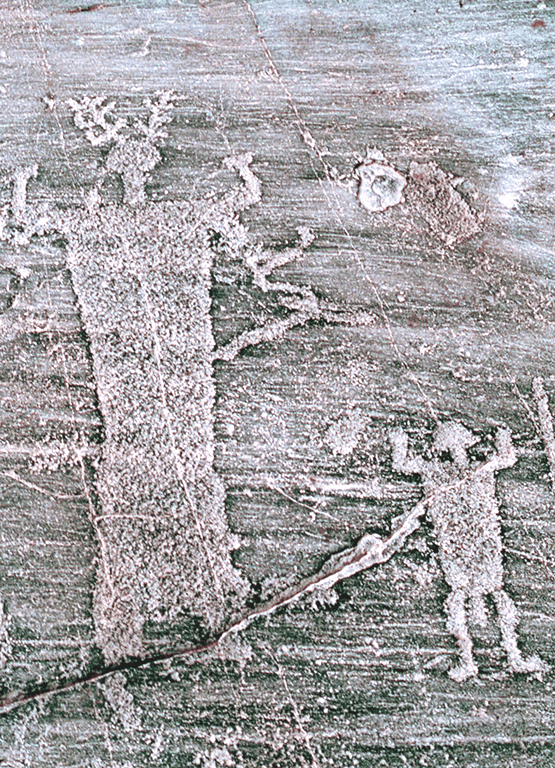
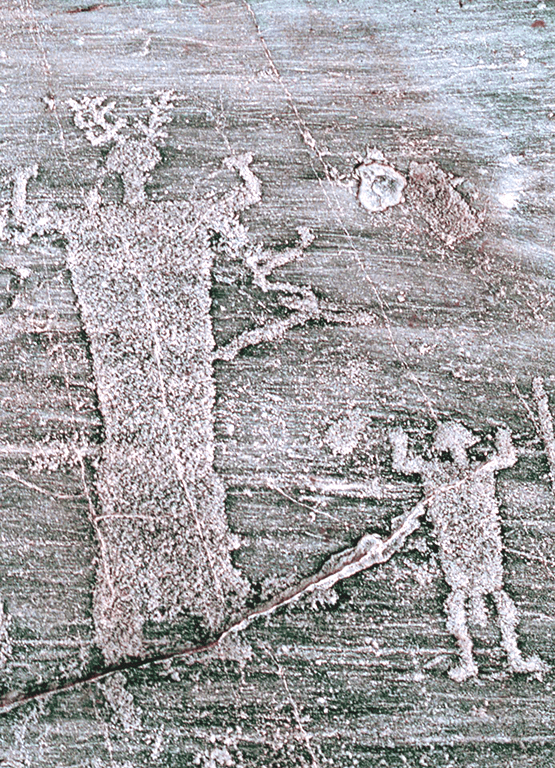
God Cernunnos with praying figure – Valcamonica (Brescia)

Present both among Paleolithic hunters and among Amerindian peoples, this worldview presupposes that all living beings, human and non-human, share the same inner subjectivity, distinguishing themselves only by their bodily “envelope.” Consequently, “changing skin” means transforming into another being. This ability to change form was attributed to specialized figures such as shamans, capable of traveling between worlds and acquiring the qualities of animals. It is in this cosmological humus, where the boundary between man and animal is fluid and permeable, that archetypal figures like Cernunnos take root, the ‘Lord of Animals’ whose hybrid form is not monstrous, but an expression of shamanic power to mediate between worlds.


The Ritual of Chaos: Festivals and Masks to Refound Order
Zoo-anthropomorphic figures do not only populate myths but erupt into social life through specific rituals. Many popular festivals, in fact, represented the establishment of a “tempus terribile,” a controlled irruption of primordial chaos that preceded a refounding of cosmic and social order. Through ritual disorder, the community regenerated itself.
A striking example are the ceremonial masked parades of Carnival (Schembartlauf) that took place in Nuremberg between the 15th and 16th centuries. Participants in these processions embodied the mythical figure of the “Wild Man”: they wore animal horns, garments made of goat or sheep skin, and girded their waists with noisy bells. These hybrid figures, halfway between man and beast, brought chaos into the orderly streets of the city, only to be ritually defeated, thus restoring order. This ritual overturning was not a simple festival, but a fundamental social mechanism to reaffirm community norms through their temporary and controlled violation. These same characteristics would be found, almost unchanged, in Alpine masked parades of subsequent centuries.

Nuremberg’s Schembart Carnival

The Surviving Horned God: Saint Nicholas and Krampus
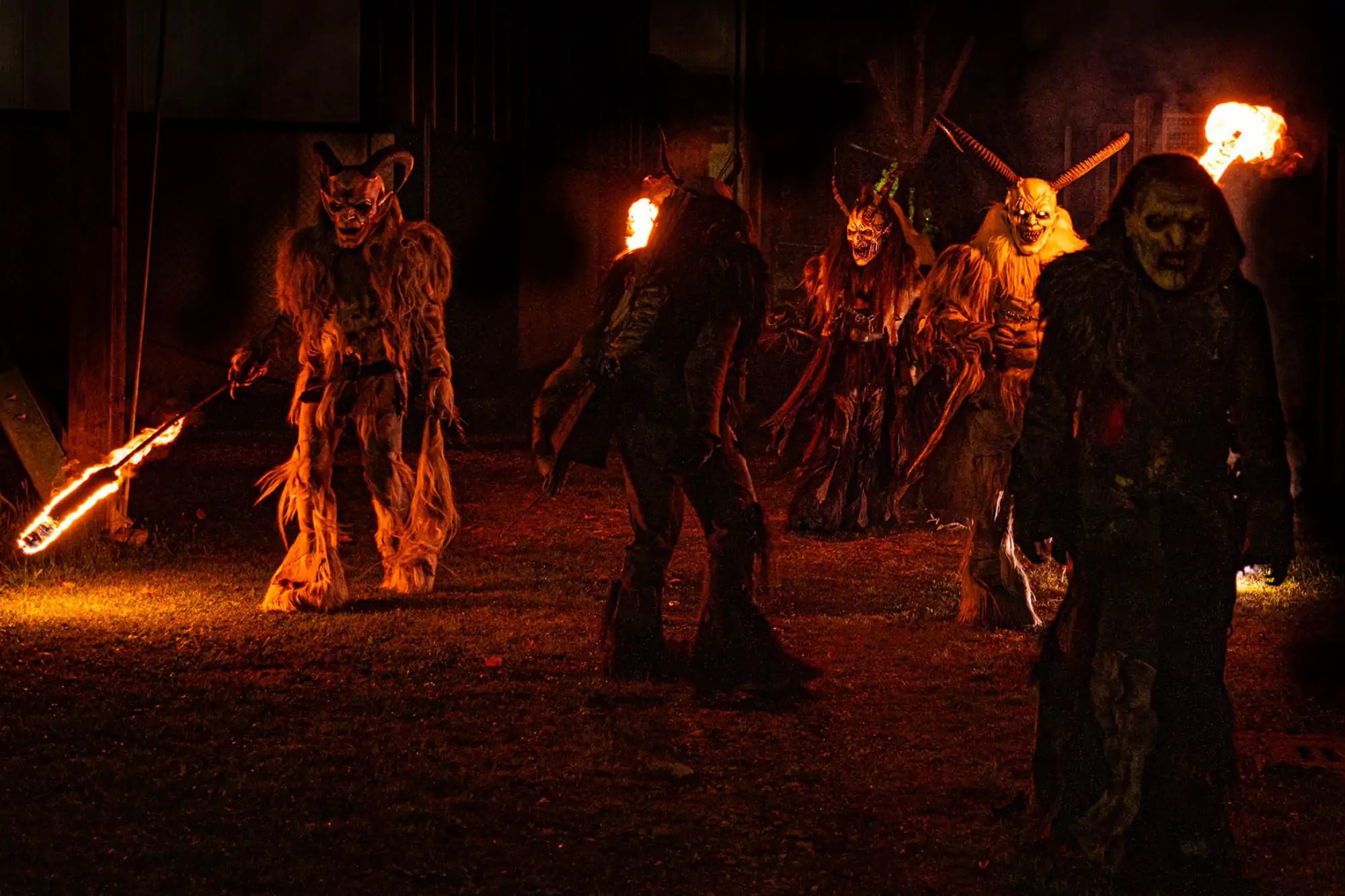
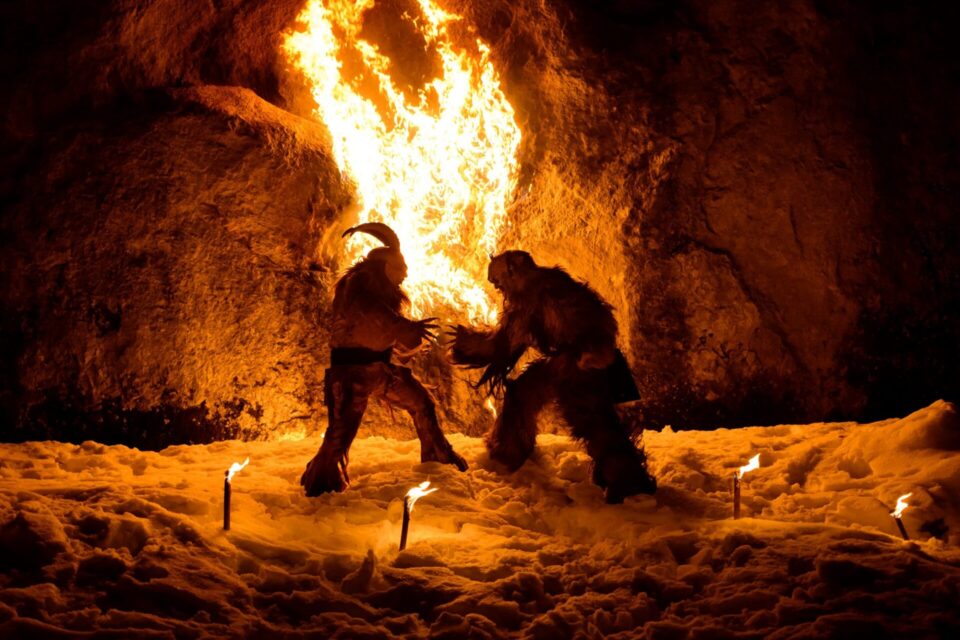
This tradition of horned and wild figures bringing disorder has survived to the present day, camouflaged in Christian folklore. Krampus, now known as the terrifying companion of Saint Nicholas, existed in pagan and Celtic traditions long before the advent of Christianity. He was a frightening figure who appeared during the passage from the “living” to the “dark” season of the year, embodying the forces of winter chaos.

According to a folk tale widespread in the Alpine area, his “Christianization” occurred as follows: in an era of great famine, shady characters disguised with animal skins and horns plundered mountain villages. Local folklore narrates that among them was hidden the devil himself, recognizable only by his goat hooves. It was then that Bishop Nicholas (the future Saint Nicholas) intervened, who with his spiritual authority managed to exorcise the demon and subjugate him to his will, transforming him from a destructive force into an instrument of justice.

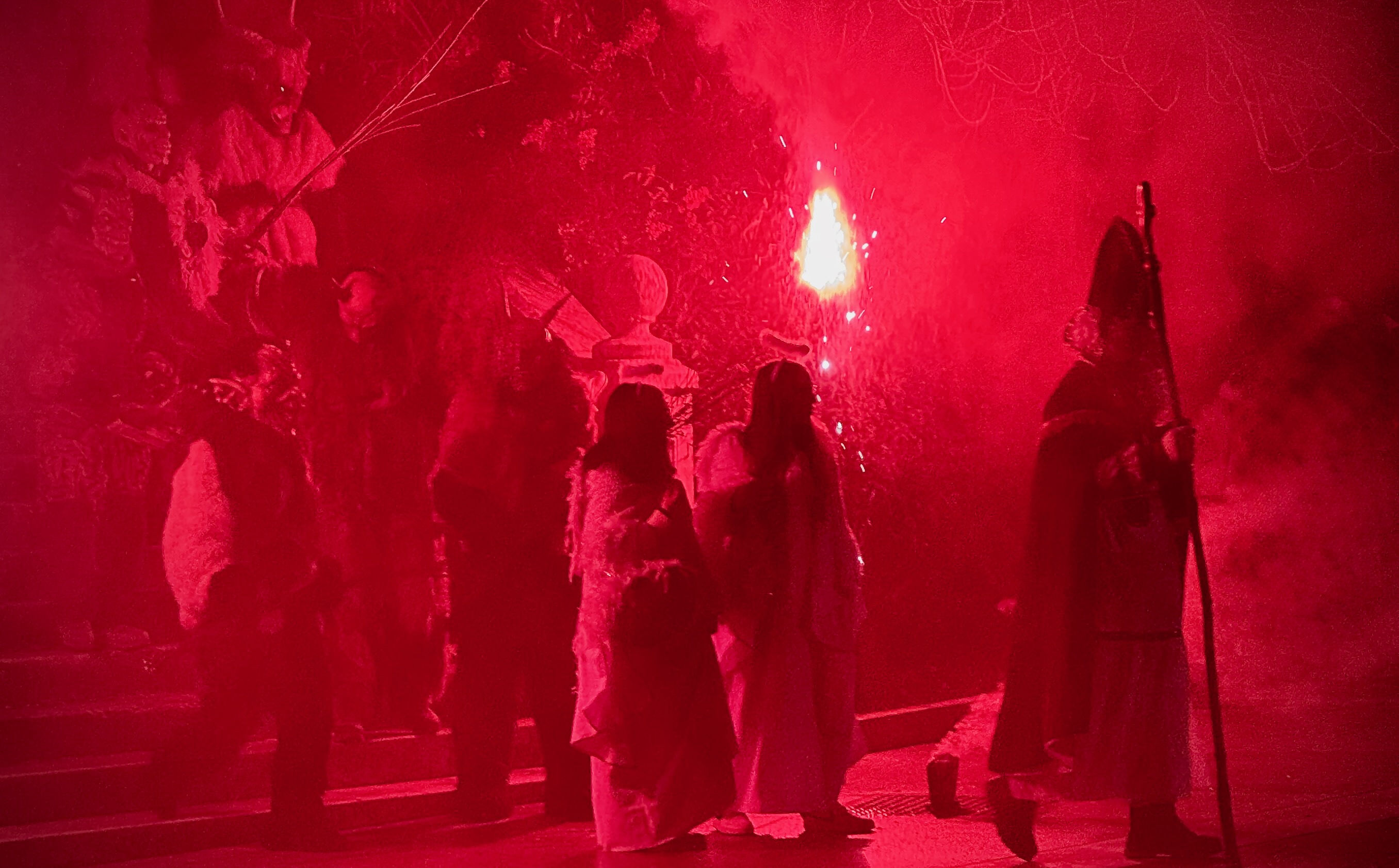
This folkloric narrative serves as a founding myth for the tradition still alive today in Austria, South Tyrol, Friuli Venezia Giulia, and Istria. On the night between December 5th and 6th, Saint Nicholas brings gifts to good children, while his retinue of Krampuses, chained and tamed devils, has the task of frightening and punishing those who have behaved badly. The domestication of Krampus by Saint Nicholas represents a classic example of religious syncretism, in which a liminal figure, embodiment of the untamed forces of nature, is not erased but subsumed and re-functionalized within the new Christian moral system. Chaos is not eliminated but hierarchically subordinated to order.


If We Know How to Listen, Myths Still Speak
Pre-Christian myths are not dead; they have simply transformed, finding a way to survive within new dominant traditions. Our journey demonstrates this: we started from the Celtic god Cernunnos, whose traces rest beneath the square of Notre-Dame, we crossed the classical world populated by satyrs and wild deities, we witnessed the chaotic masked parades of carnival, and finally arrived at Krampus, the pagan demon “domesticated” by a Christian saint.
The final proof of this survival through transformation lies in the fate of the very idea of contamination between the human and animal world. Once considered sacred, an expression of the fluidity of the cosmos, with the advent of Christianity and the subsequent persecution of witchcraft, this permeability between the spheres of the living was definitively relegated “to the realm of the demonic and magical.” Yet, if we know how to listen, these ancient figures still speak. From the deer-god to the hairy demon, their whispers tell us of a primordial bond with nature, of a time when chaos was not only to be feared but also celebrated in order to refound order. One need only lend an ear beyond the patina of more recent traditions to hear how, from the foundations of a Gothic cathedral, a horned god continues to whisper his eternal story.

Dalle fondamenta di Notre-Dame al Krampus. Il mito cosmogonico dell’Ordo ab Chao.

Un Dio Pagano nel Cuore della Cristianità
Pochi si aspetterebbero di trovare le radici del paganesimo celtico sepolte nel cuore della cristianità. Eppure, nel secolo scorso, gli scavi nel sagrato della cattedrale di Notre-Dame a Parigi hanno restituito proprio questo: due bassorilievi di antiche divinità galliche, Cernunnos, il dio cornuto signore della natura, e Hesus, una sua controparte marziale.

Immagine di Cernunnos dal Pilier des nautes (“Pilastro dei barcaioli“), Parigi.

La storia, si sa, ama l’ironia. Ed è difficile immaginare un’ironia più sferzante di quella di un tempio della cristianità, simbolo per eccellenza della sottomissione del paganesimo, che rivela nelle sue immediate vicinanze le tracce di quelle divinità che credeva di aver cancellato.
Questa scoperta non è un semplice aneddoto archeologico, ma il punto di partenza per una riflessione più ampia. I miti precristiani, infatti, non sono semplicemente scomparsi. Per sopravvivere alla marea della nuova fede dominante, hanno dovuto mescolarsi, mimetizzarsi e trasformarsi, insinuandosi nelle pieghe delle nuove tradizioni. In questo articolo seguiremo le tracce di una di queste figure archetipiche, quella del Dio Cornuto. Un viaggio che ci porterà dalle fondamenta gallo-romane di Parigi fino alle spaventose maschere del folklore alpino, collegando il dio celtico Cernunnos alla figura del Krampus. Un percorso che svela il significato cosmologico universale del passaggio dal caos all’ordine, un rito che l’umanità celebra da tempo immemore.

La Scoperta a Notre-Dame: Chi è Cernunnos?
Durante gli scavi archeologici effettuati a partire dagli anni ’60 nel sagrato antistante la cattedrale di Notre-Dame a Parigi, sono stati rinvenuti dei bassorilievi raffiguranti divinità galliche. Tra queste, spiccava la figura di Cernunnos. L’iconografia del bassorilievo lo rappresenta come una divinità maschile celtica dotata di corna (o più precisamente di palchi, antlers), un simbolo potente che lo lega indissolubilmente alla natura, al mondo pagano e a una spiritualità antica e primordiale.
Il luogo del ritrovamento, l’Île de la Cité, non è casuale. Questo era il cuore pulsante di Lutetia, l’insediamento fondato nel III secolo a.C. dalla tribù gallica dei Parisii, molto prima che la conquista romana ridisegnasse la mappa culturale e religiosa della Gallia. La presenza di un’effigie di Cernunnos testimonia l’importanza del suo culto in un’epoca in cui il sacro e il selvaggio erano ancora profondamente intrecciati.

Le Radici Profonde: L’Uomo, l’Animale e il Divino
Per comprendere una figura come Cernunnos, è necessario fare un balzo indietro nel tempo, fino al Paleolitico Superiore (40.000-15.000 anni fa). Nelle profonde grotte europee, come quella di Chauvet in Francia, i nostri antenati hanno lasciato testimonianze straordinarie della loro visione del mondo: pareti istoriate con innumerevoli figure di animali. Questo non era semplice amore per l’arte, ma l’espressione di una precisa concezione della realtà, che potremmo definire “ontologia animistica”.

Dio Cernunnos con figura in preghiera – Valcamonica (Brescia)

Presente tanto tra i cacciatori paleolitici quanto tra i popoli amerindiani, questa visione del mondo presuppone che tutti gli esseri viventi, umani e non, condividano la stessa soggettività interiore, distinguendosi solo per il loro “involucro” corporeo. Di conseguenza, “cambiar pelle” significa trasformarsi in un altro essere. Questa abilità di mutare forma era attribuita a figure specializzate come gli sciamani, capaci di viaggiare tra i mondi e acquisire le qualità degli animali. È in questo humus cosmologico, in cui il confine tra uomo e animale è fluido e permeabile, che affondano le radici di figure archetipiche come Cernunnos, il ‘Signore degli Animali’ la cui forma ibrida non è mostruosa, ma espressione di un potere sciamanico di mediazione tra i mondi.

Il Rito del Caos: Feste e Maschere per Rifondare l’Ordine
Le figure zoo-antropomorfe non popolano solo i miti, ma irrompono nella vita sociale attraverso rituali specifici. Molte feste popolari, infatti, rappresentavano l’instaurazione di un “tempus terribile”, un’irruzione controllata del caos primordiale che preludeva a una rifondazione dell’ordine cosmico e sociale. Attraverso il disordine rituale, la comunità si rigenerava.
Un esempio lampante sono le mascherate cerimoniali di Carnevale (Schembartlauf) che si svolgevano a Norimberga tra il XV e il XVI secolo. I partecipanti a questi cortei incarnavano la figura mitica del “Selvaggio”: indossavano corna di animali, abiti fatti di pelle di capra o pecora e si cingevano i fianchi di rumorosi campanacci. Queste figure ibride, a metà tra l’uomo e la bestia, portavano il caos nelle strade ordinate della città, per poi essere ritualmente sconfitte, ristabilendo così l’ordine. Questo capovolgimento rituale non era una semplice festa, ma un meccanismo sociale fondamentale per riaffermare le norme comunitarie attraverso la loro temporanea e controllata violazione. Queste stesse caratteristiche si ritroveranno, quasi immutate, nelle mascherate alpine dei secoli successivi.

Schembartlauf di Norimberga

Il Dio Cornuto Sopravvissuto: San Nicolò e il Krampus
Questa tradizione di figure cornute e selvagge che portano il disordine è sopravvissuta fino ai giorni nostri, mimetizzandosi nel folklore cristiano. Il Krampus, oggi noto come il terrificante compagno di San Nicolò, esisteva nelle tradizioni pagane e celtiche ben prima dell’avvento del cristianesimo. Era una figura paurosa che appariva durante il passaggio dalla stagione “viva” a quella “buia” dell’anno, incarnando le forze del caos invernale.

Secondo un racconto popolare diffuso in area alpina, la sua “cristianizzazione” avvenne in questo modo: in un’epoca di grande carestia, loschi figuri travestiti con pelli e corna di animali depredavano i villaggi di montagna. Il folklore locale narra che tra di loro si nascondeva il diavolo in persona, riconoscibile solo dai suoi zoccoli caprini. Fu allora che intervenne il vescovo Nicola (il futuro San Nicolò), che con la sua autorità spirituale riuscì a esorcizzare il demone e a sottometterlo al proprio volere, trasformandolo da forza distruttiva a strumento di giustizia.

Questa narrazione folkloristica funge da mito di fondazione per la tradizione ancora oggi viva in Austria, in Alto Adige, in Friuli Venezia Giulia e in Istria. Nella notte tra il 5 e il 6 dicembre, San Nicolò porta i doni ai bambini buoni, mentre il suo seguito di Krampus, diavoli incatenati e domati, ha il compito di spaventare e punire quelli che si sono comportati male. L’addomesticamento del Krampus da parte di San Nicolò rappresenta un classico esempio di sincretismo religioso, in cui una figura liminale, incarnazione delle forze indomite della natura, non viene cancellata ma sussunta e ri-funzionalizzata all’interno del nuovo sistema morale cristiano. Il caos non è eliminato, ma gerarchicamente subordinato all’ordine.

Se Sappiamo Ascoltare, i Miti Parlano Ancora
I miti precristiani non sono morti; si sono semplicemente trasformati, trovando il modo di sopravvivere all’interno delle nuove tradizioni dominanti. Il nostro viaggio lo dimostra: siamo partiti dal dio celtico Cernunnos, le cui tracce riposano sotto il sagrato di Notre-Dame, abbiamo attraversato il mondo classico popolato da satiri e divinità selvagge, abbiamo assistito alle mascherate caotiche del carnevale e siamo infine giunti al Krampus, il demone pagano “addomesticato” da un santo cristiano.
La prova finale di questa sopravvivenza per trasformazione sta nel destino stesso dell’idea di contaminazione tra mondo umano e animale. Un tempo considerata sacra, espressione della fluidità del cosmo, con l’avvento del cristianesimo e la successiva persecuzione della stregoneria, questa permeabilità tra le sfere del vivente venne definitivamente relegata “nell’ambito del demoniaco e del magico”. Eppure, se sappiamo ascoltare, queste antiche figure parlano ancora. Dal dio-cervo al demone peloso, i loro sussurri ci raccontano di un legame primordiale con la natura, di un tempo in cui il caos non era solo da temere, ma anche da celebrare per poter rifondare l’ordine. Basta solo prestare orecchio oltre la patina delle tradizioni più recenti, per sentire come, dalle fondamenta di una cattedrale gotica, un dio cornuto continui a sussurrare la sua eterna storia.

NATALE DI ALATRI 2015

Le mura poligonali dell’Acropoli di Alatri, di origine megalitica, sono oggetto da anni di un malinteso relativo alla loro datazione, secondo il quale sarebbero da attribuire alla mano degli antichi Romani. Solo attraverso studi indipendenti sarà possibile ristabilire la verità sull’origine di un sito così controverso, la cui tecnica costruttiva nulla ha a che fare con quella utilizzata dai Romani. Il video mostra la giornata internazionale di studio organizzato il 21 giugno 2015 all’alba del Solstizio d’Estate sull’Acropoli di Alatri a cui hanno partecipato Robert Bauval, Sandro Zicari, Chiara Dainelli, Paolo Debertolis e Daniele Gullà.

ASTRONOMICAL INTERPRETATION OF WIZARD’S HAT

The Wizard Gandalf of The Lord of the Ring by  J.R.R. Tolkien

The Wizard Gandalf of The Lord of the Ring by J.R.R. Tolkien

Wizards are often represented with a high, pointed hat and, sometimes decorated with stars and planets. Georges Ivanovič Gurdjieff, in his Scenario of the Ballet “The Struggle of the Magicians”, describes wizard’s dressing and, specifically, his hat:

“The Magician takes off his garment, receives some unguent from one of his pupils, smears it over his body, resumes his garment and over his usual dress puts on a robe withvery wide sleeves. The robe is bordered all round with the signs of the Zodiac; on the back is embroidered the symbol of the pentagram, on the breast a skull and crossbones. On his head he places a high pointed head-dress embroidered with large and small stars.”

In the episode “The Sorcerer’s Apprentice” by Paul Dukas, based on Goethe’s 1797 poem “Der Zauberlehrling” of the movie “Fantasia” by Walt Disney, Mickey Mouse, young apprentice of the sorcerer Yen Sid, wears precisely the hat as described by Gurdjieff.

“The Sorcerer's Apprentice”  by Walt Disney

“The Sorcerer’s Apprentice” by Walt Disney

The encounter, one more time, happened “by chance” at Neues Museum (world-renowned for Egyptian Nefertiti bust) in Berlin, Germany. At Ground Floor of the museum, I bumped into a glass case containing the Berliner GoldenHut, the Berlin Gold Hat.


Berlin Gold Hat - Neues Museum - Berlin

Berlin Gold Hat – Neues Museum – Berlin

The Berlin Gold hat is a very specific and rare type of archaeological artifact from Bronze Age Europe. So far, four such objects (“cone-shaped gold hats of the Schifferstadt type”) are known. The objects are made of thin sheet gold and were attached externally to long conical and brimmed headdresses which were probably made of some organic material and served to stabilise the external gold leaf. The following Golden Hats are known:

  • Golden Hat of Schifferstadt, found in 1835 at Schifferstadt near Speyer, circa 1400–1300 BC;
  • Avanton Gold Cone, incomplete, found at Avanton near Poitiers in 1844, circa 1000–900 BC;
  • Golden Cone of Ezelsdorf, found near Nuremberg in 1953, circa 1000–900 BC;
  • Berlin Gold Hat, found probably in Swabia or Switzerland, circa 1000–800 BC.


The four Golden Hats

The four Golden Hats

The Golden Hats served as religious insignia for the deities or priests of a sun cult then widespread in Central Europe. Wilfried Menghin, in his “Acta Praehistorica et Archaeologica”, verified that the ornamentation of the gold leaf cones of the Schifferstadt type, to which the Berlin example belongs, represent a lunisolar calendar. The object would have permitted the determination of dates or periods in both lunar and solar calendars.

Luni-Solar Calendar on Berlin Gold Hat

Luni-Solar Calendar on Berlin Gold Hat

The functions discovered so far would permit the counting of temporal units of up 57 months. A simple multiplication of such values would also permit the calculation of longer periods, e.g. metonic cycles. Each symbol, or each ring of a symbol, represents a single day.


THE SOLAR SASH OF THE KINGS

The Balteus, the standard belt worn by the Roman legionary, used to tuck clothing into or to hold weapons, is one of the typical ornaments of kings, dignitaries and winners. Why has this accessory become a symbol of greatness?

Screenshot 2014-12-24 12.45.57

One more time, I’ll try to give an astronomical-astrological explanation of this symbol. The Sun, King of Gods in ancient Tradition, goes from East to West, during the day, and, like the planets, moves around the Zodiac. In fact, the Sun does not wander all over the sky but is confined to a narrow strip, dividing it in half. Stars along that strip (the ecliptic) are traditionally divided into the 12 constellations. The ecliptic plane is tilted 23.5° with respect to the plane of the celestial equator since the Earth’s spin axis is tilted 23.5° with respect to its orbit around the Sun. The name, related to “zoo,” comes because most of these constellations are named for animals–Leo the lion, Aries the ram, Scorpio the scorpion, Cancer the crab, Pisces the fish, Capricorn the goat and Taurus the bull.

Il percorso del Sole e dei segni zodiacali lungo l'eclittica solare inclinata

The path of the Sun and Zodiacal Signs along the tilted ecliptic

The Zodiacal Belt was often depicted on handicrafts and on clothes in order to symbolize the relationship between the man wearing it and the Sun, and to link him with it. Nowadays it is still possible to see an example at Vatican Museum, in Rome: the Helios Chiaramonti.

Helios Chiaramonti - Musei Vaticani - Roma

Helios Chiaramonti – Vatican Museum – Rome

Helios, the Sun God, is wearing a Zodiacal Balteus, with the Zodiacal Signs, from the right shoulder to the left hip and represents the Sun and its bound path along the ecliptic.

POOR DEVILS OR GODS OF PAST ASTROLOGICAL AGES

The Mith of Transition from the Age of Taurus to the Age of Aries

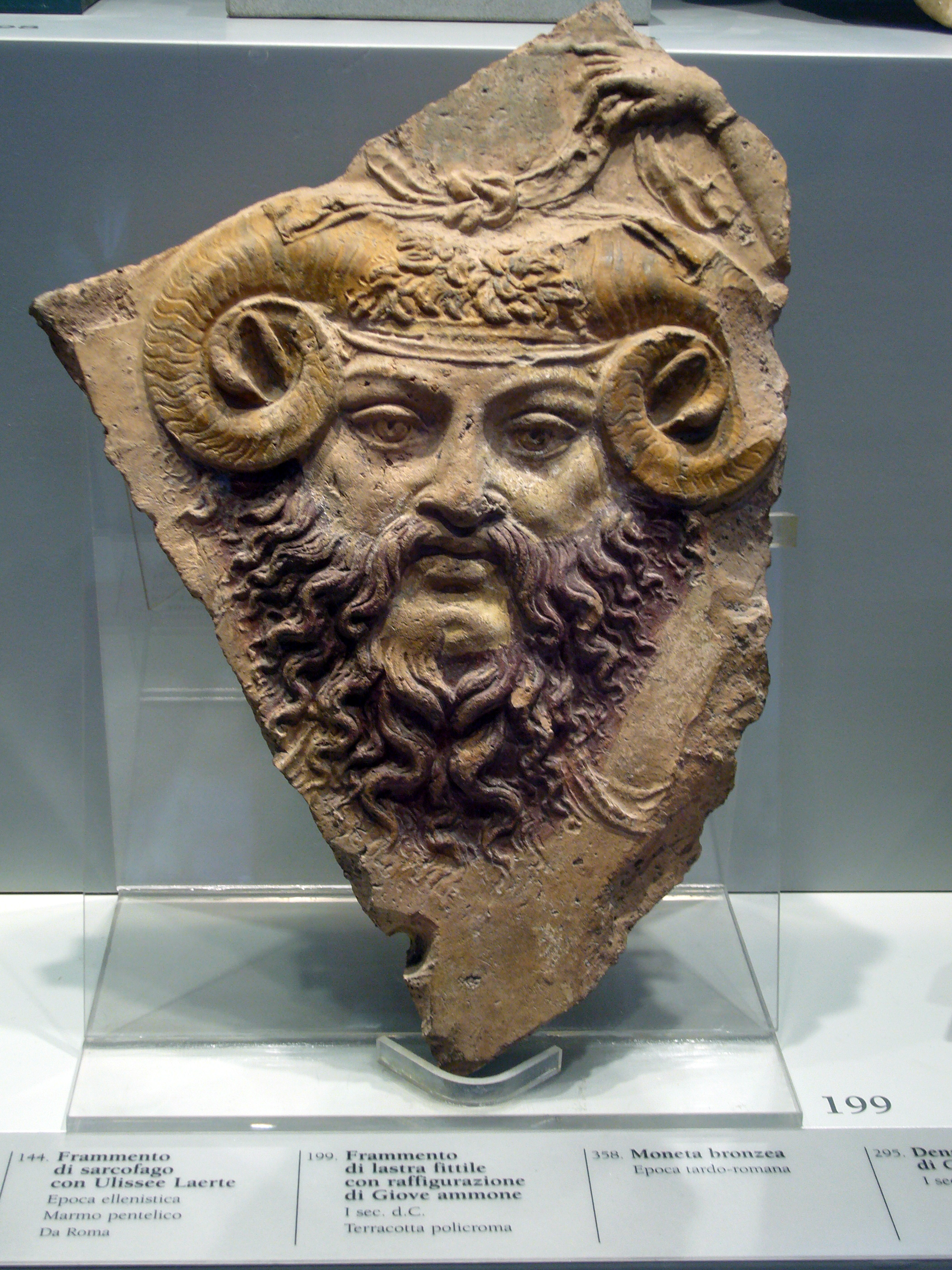
The Mith of Achelous , the Bull God, symbol of the age of Taurus (4000 b.C. – 2000 b.C.) defeated by Hercules (the Sun) and the coming of Zeus Ammon, the Ram God (2000 b.C. – 0 C.E.).

The god of the river Achelous which was the greatest, and according to tradition, the most ancient among the rivers of Greece. He with 3000 brother-rivers is described as a son of Oceanus and Thetys (Hes. Theog. 340), or of Oceanus and Gaea, or lastly of Helios and Gaea. (Natal. Com. vii. 2.)

Achelous, the Bull God

Achelous, the Bull God


Rising of Sun at Vernal Equinox in Taurus Constellation (4000 b.C. – 2000 b.C.)


The origin of the river Achelous is thus described by Servius (ad Virg. Georg. i. 9; Aen. viii. 300): When Achelous on one occasion had lost his daughters, the Sirens, and in his grief invoked his mother Gaea, she received him to her bosom, and on the spot where she received him, she caused the river bearing his name to gush forth. Other accounts about the origin of the river and its name are given by Stephanus of Byzantium, Strabo (x. p. 450), and Plutarch. (De Flum. 22.) Achelous the god was a competitor with Heracles in the suit for Deïaneira, and fought with him for the bride. Achelous was conquered in the contest, but as he possessed the power of assuming various forms, he metamorphosed himself first into a serpent and then into a bull. But in this form too he was conquered by Heracles, and deprived of one of his horns, which however he recovered by giving up the horn of Amalthea. (Ov. Met. ix. 8, &c.; Apollod. i. 8. § 1, ii. 7. § 5.)

Zeus Ammon

Zeus Ammon


Rising of Sun at Vernal Equinox in Aries Constellation (2000 b.C. – 0 C.E.)